

Commerce’s Low-Income Home Energy Assistance Program (LIHEAP) aims to help low-income households in Washington state receive affordable, dependable utility services and avoid disconnection.
Program services
LIHEAP provides energy assistance to households in Washington through a network of community action agencies and local partners. Through LIHEAP, you may be eligible for:
- Financial assistance with your utility bill
- Help repairing or replacing an unsafe or inoperative heating or cooling unit
- Making your home more energy efficient through Commerce’s Weatherization Program
Are you eligible?
Eligibility is based on several factors, including:
- Heating costs
- Household income
- Household size
Download eligibility guidelines for LIHEAP energy assistance (PDF). Eligibility is based on net income, and supporting agencies determine income qualifications.
How to receive energy assistance
To apply for energy assistance, you must schedule an appointment with an organization that offers services in your area.
Connect with a provider
Use the LIHEAP public map tool to view and select the county you live in.
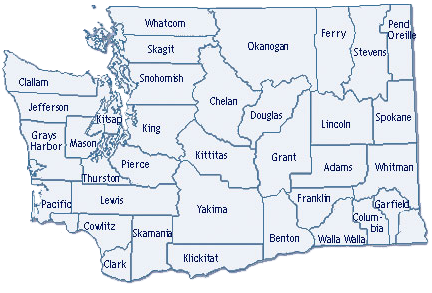
The tool will show you the contact information for the agency in your area and instructions for scheduling an appointment.
Note: Commerce does not determine eligibility or award grants to households.
| Nearby City/Cities | County | Apply for Energy Assistance |
|---|---|---|
| Othello, Ritzville | Adams | Opportunities Industrialization Center |
| Clarkston | Asotin | Community Action Partnership |
| Kennewick, Richland | Benton | Benton-Franklin Community Action Committee |
| Wenatchee | Chelan | Chelan-Douglas Community Action Council |
| Port Angeles, Sequim, Forks | Clallam | Olympic Community Action Programs |
| Vancouver, Camas, Battle Ground, Washougal, Ridgefield | Clark | Olympic Community Action Programs |
| Dayton | Columbia | Blue Mountain Action Council |
| Longview, Kelso, Woodland | Cowlitz | Lower Columbia Community Action Council |
| East Wenatchee, Bridgeport | Douglas | Chelan-Douglas Community Action Council |
| Republic | Ferry | Rural Resources Community Action |
| Pasco, Connell | Franklin | Benton-Franklin Community Action Committee |
| Pomeroy | Garfield | Blue Mountain Action Council |
| Moses Lake, Ephrata, Quincy, Mattawa | Grant | Opportunities Industrialization Center of WA |
| Aberdeen, Hoquiam, Ocean Shores | Grays Harbor | Coastal Community Action Program |
| Oak Harbor, Coupeville | Island | Opportunity Council |
| Port Townsend | Jefferson | Olympic Community Action Programs |
| Seattle (Central Seattle) | King | Byrd Barr Place |
| Bellevue, Redmond, Kirkland | King | Hopelink |
| Kent, Auburn, Federal Way | King | King County Housing Authority |
| Kent, Federal Way, Des Moines | King | Multi-Service Center |
| Seattle | King | Seattle Office of Housing (Weatherization) |
| Bremerton, Brainbrudge Island, Poulsbo, Silverdale, Port Orchard | Kitsap | Kitsap Community Resources |
| Ellensburg | Kittitas | HopeSource |
| Goldendale | Klickitat | Washington Gorge Action Programs |
| Centralia, Chehalis | Lewis | Community Action Council of Lewis, Mason & Thurston Counties |
| Davenport (nearest regional city: Spokane) | Lincoln | Rural Resources Community Action |
| Shelton | Mason | Community Action Council of Lewis, Mason & Thurston Counties |
| Omak, Okanogan, Brewster | Okanogan | Okanogan County Community Action Council |
| Long Beach, Raymond, South Bend | Pacific | Coastal Community Action Program |
| Newport | Pend Oreille | Rural Resources Community Action |
| Tacoma | Pierce | Metropolitan Development Council |
| Puyallup, Lakewood, Gig Harbor, Bonney Lake, University Place, Sumner | Pierce | Pierce County Human Services |
| Friday Harbor | San Juan | Opportunity Council |
| Mount Vernon, Burlington, Anacortes, Sedro-Woolley | Skagit | Community Action of Skagit County |
| Mount Vernon, Burlington, Anacortes, Sedro-Woolley | Skagit | Housing Authority of Skagit County |
| Stevenson, North Bonneville | Skamania | Washington Gorge Action Programs |
| Everett, Marysville, Lynnwood, Edmonds, Lake Stevens, Mountlake Terrace | Snohomish | Snohomish County Human Services |
| Spokane, Spokane Valley, Liberty Lake | Spokane | Spokane Neighborhood Action Partners (SNAP) |
| Colville, Chewelah | Stevens | Rural Resources Community Action |
| Olympia, Lacey, Tumwater, Yelm | Thurston | Community Action Council of Lewis, Mason & Thurston Counties |
| Cathlamet | Wahkiakum | Lower Columbia Community Action Council |
| Walla Walla, College Place | Walla Walla | Blue Mountain Action Council |
| Bellingham, Ferndale, Lynden, Blaine | Whatcom | Opportunity Council |
| Pullman, Colfax, Palouse | Whitman | Community Action Center of Whitman County |
| Yakima, Selah, Moxee (north of Union Gap) | Yakima | Opportunities Industrialization Center of WA |
| Sunnyside, Toppenish, Grandview, Wapato, Granger, Union Gap | Yakima | Yakima Valley Farm Workers Clinic |
Additional resources
Am I eligible to apply for LIHEAP?
You may be eligible to apply for LIHEAP grant if:
- If you reside in Washington
- Your household has not received a LIHEAP grant during the current program year (October-September)
- Your household meets the income guidelines for the program, then you may be eligible for LIHEAP
The income limits are set at 150% of the federal poverty level (FPL) and may be located on the Eligibility Guidelines (PDF) page. The eligibility information provided on this site is only a guide. Eligibility has to be determined through your local LIHEAP provider. Find a provider near you and schedule an appointment today.
What services are available?
LIHEAP is primarily used to assist households with a one-time heating grant made directly to your energy provider. In addition, the program now includes cooling services. In some cases, our program may also assist you in repairing or replacing an unsafe, inoperative, and dysfunctional heating or cooling system.
Is LIHEAP the only energy assistance program?
No, LIHEAP is not the only energy assistance program available in Washington. Many energy providers across the state administer their own energy assistance programs and offer special rate discounts for qualified customers. Some of these programs are designed similarly to the LIHEAP program and are provided through the same agencies that provide your local LIHEAP program.
Where do I apply for LIHEAP?
To apply for LIHEAP, you must schedule an appointment through the LIHEAP provider in your community. Each agency has its own process for scheduling appointments. You’ll have to follow the scheduling procedures specific to the agency in your area.
The Department of Commerce does not schedule appointments. Find a LIHEAP provider in your area and connect with them directly to apply.
How often can I apply?
You can apply for LIHEAP once each program year. The program year runs from October 1 through September 30.
Does it matter what my heat source is?
No, it doesn’t matter what your heat source is. Our program awards energy assistance grants regardless of fuel type. We assist households with electric, gas, propane, oil, coal and wood.
Do I need to provide documentation?
Yes, you will need to provide documentation to receive a LIHEAP grant. The documentation requested may vary by LIHEAP provider. Typically, you’ll be asked to document your identity, residence, heat costs and income. Make sure to find out what documentation you’ll need before your scheduled appointment.
How much money will I get?
The amount of money awarded to your household will depend on multiple factors. For example, each household’s size, income and annual heat cost will affect the amount of their LIHEAP grant. You’ll have to schedule a LIHEAP appointment with the provider in your community to find out how much you could receive.
Will you pay me directly?
No. In most cases, you won’t receive payment directly. LIHEAP almost always pays grants directly to the energy utility. Sometimes, a LIHEAP grant may be awarded directly to a household instead of the energy provider, but that is uncommon.